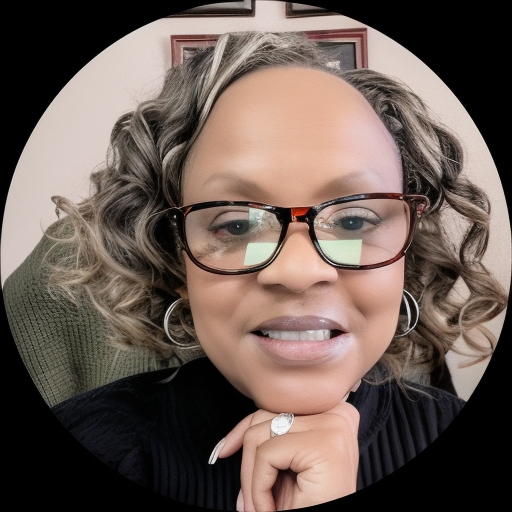
Sharon Bryant, LPC
Practical support for stress and life transitions
Opens BetterHelp in a new tab, where you can review online therapy options.
At a glance
- Listed location
- Georgia
- Experience
- 30+ years
- Credentials
- LPC
- Languages
- English
- License (Georgia)
- LPC · No. LPC012879
- NPI
- 1124752514
Copied as listed by the therapist. You can check a license with the state board and an NPI with the national registry.
- Strengths-based focus
- Goal-oriented tools
- Experienced counselor
About Sharon
She uses cognitive behavioral ideas to help people notice unhelpful thinking and try small changes. Motivational Interviewing is part of her approach when someone needs help finding reasons to change behavior. Solution-Focused techniques are used to identify what works and build on it quickly.
Sharon aims to create an open, nonjudgmental setting where people can talk about difficult feelings. She encourages straightforward conversations about goals and what would feel different in daily life. Sessions tend to focus on concrete tools and doable steps rather than long explanations.
Her practice includes common issues such as sleep problems, intimacy-related concerns, parenting strain, and workplace stress. She also lists a focus on aging and geriatric issues and on concerns like isolation, life purpose, and midlife transitions.
People who want to start are asked to complete a short matching questionnaire and then schedule based on the therapist's availability. Sharon works in English and does not take international clients at this time.
Areas of expertise
Primary focus
Also works with
Additional focus areas
Therapeutic approaches
Experience
30+ years
Credentials
Georgia
Languages
English
How Sharon's Approaches Work in Online Therapy
Sharon uses cognitive behavioral ideas to help people spot patterns in thoughts and behaviors, and then try small experiments to see what changes. This approach helps with anxiety, low mood, sleep problems, and situations where practical steps matter.She also draws on Motivational Interviewing to support people who want to change behaviors like substance use or routines that are no longer serving them. That method focuses on finding personal reasons for change and building commitment one step at a time.
Finding the right approach is part of the work together. Sharon will talk with each person about their goals and preferences and then choose techniques that fit. Decisions about methods and pace are collaborative and can be adjusted as progress is made.
The practical benefits of online therapy include easier scheduling and fitting sessions into a busy life, and the ability to continue care when travel or time are barriers. The therapist's biography does not list specific session formats, so confirm current options before booking. Online work can make it simpler to keep momentum between visits and to apply tools in day-to-day routines.
Frequently asked questions
What kinds of concerns does Sharon work with?
She helps people with stress, anxiety, depression, grief, addictions, self-esteem, sleep problems, intimacy-related issues, and parenting strain, among other concerns.
How would you describe Sharon's therapy style?
Her style is practical and solution-focused, using cognitive behavioral techniques and motivational interviewing to set small goals and try them in daily life.
What is Sharon's clinical background and experience?
Sharon is a Licensed Professional Counselor with 30 years of experience working with mood, substance use, grief, and related concerns.
Where is Sharon located and licensed?
She is licensed in Georgia as an LPC and practices there.
In which languages are sessions offered?
Sessions are offered in English.
What session formats are available?
Session formats are not specified in the biography; please confirm current session options before booking.
How does payment and cost work?
Cost varies with location and therapist availability, and sessions use a subscription that can be canceled at any time.
How do I begin working with Sharon?
Use the Start Therapy button, complete the short matching questionnaire, and then schedule according to the therapist's availability.